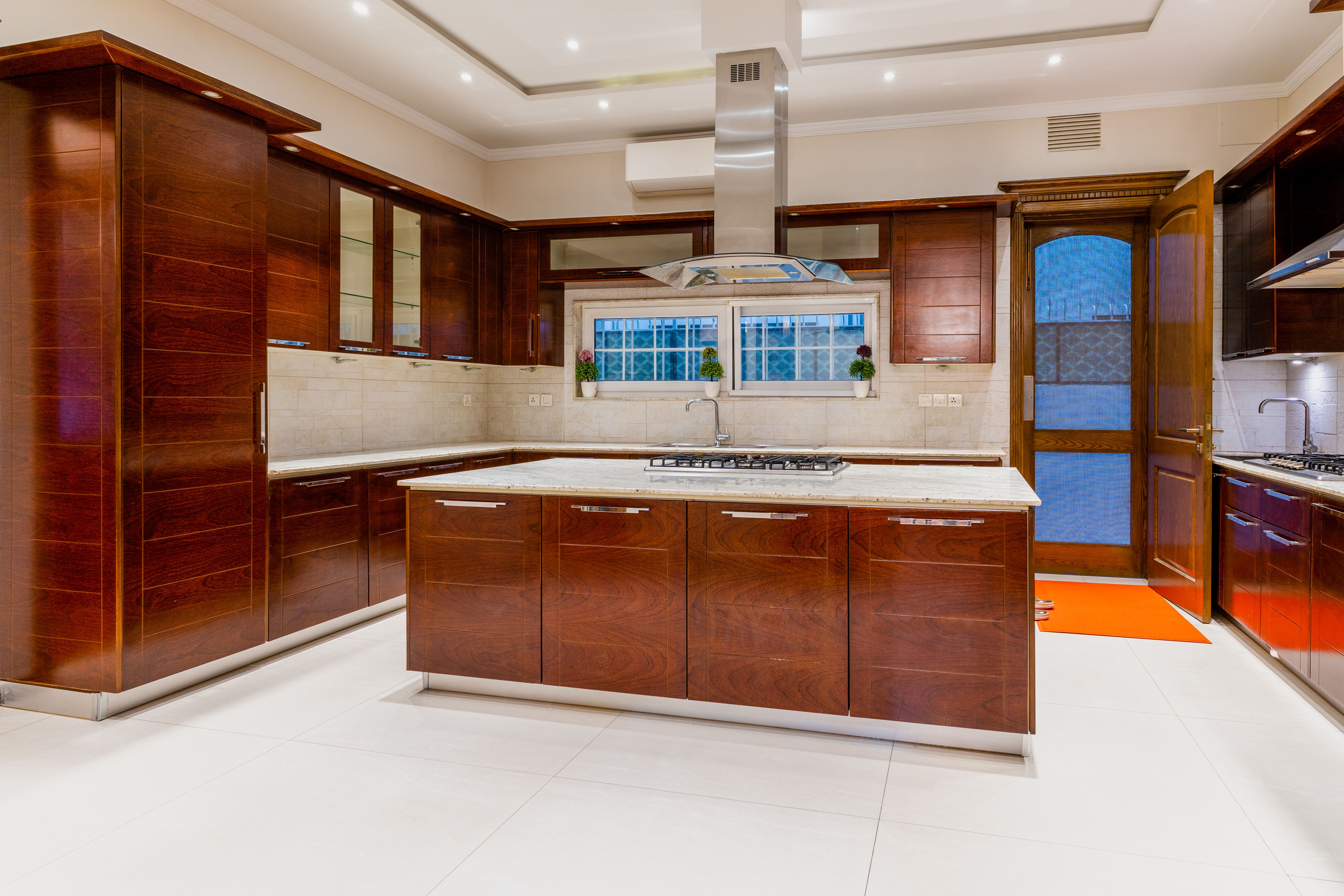
Every year, Indian homeowners spend an estimated ₹8,000 crore on termite damage repair and furniture replacement. The culprit is almost always the same: wood, MDF or plywood furniture that looked beautiful when installed — and began deteriorating within 3–5 years.
If you are planning a modular kitchen, wardrobe or living room furniture purchase, this guide gives you the honest, complete comparison between stainless steel and wood so you can make an informed decision — not just a decorative one.
"The furniture you buy today will be with you for the next 10–20 years. The material you choose determines whether those years are spent maintaining it — or enjoying it."
Ferro Designs, NoidaWhy Wood Dominates the Indian Market — And Why That Is Changing
Wood has been the default Indian furniture material for decades — not because it is necessarily the best choice, but because it was the only accessible premium option. Carpenters are everywhere, wood is familiar, and the upfront cost is lower.
But three factors are changing this equation rapidly:
- Rising termite infestations — India's humid subtropical climate is termite country. Over 60 species of termites exist in India, all of which feed on cellulose — the core component of wood.
- Increasing awareness of steel alternatives — stainless steel kitchens have been standard in commercial kitchens for decades. The technology is now accessible for homes.
- Long-term cost consciousness — Indian homeowners are increasingly calculating the total cost of ownership, not just the upfront price.
The Termite Problem: Why Wood Furniture Is High Risk in India
Termites are called "silent destroyers" because they can hollow out an entire wooden wardrobe or kitchen cabinet from the inside before any visible signs appear. By the time you notice the damage, it is often too late for repair — replacement is the only option.
In India's climate:
- Humidity levels regularly exceed 60% in monsoon season — ideal conditions for termite colonies
- Pest control treatments cost ₹3,000–15,000 per service and must be repeated every 6–12 months in termite-prone areas
- Standard wood treatments (borate, varnish) only delay — they do not eliminate — the risk
- Kitchen cabinets near sinks and floor-level units are the highest-risk items due to moisture exposure
A ₹3 lakh wooden modular kitchen typically requires ₹15,000–30,000 in annual pest control and maintenance. Over 10 years, that is ₹1.5–3 lakh in additional costs — on top of the fact that most wooden kitchens need partial replacement between years 8–12. Stainless steel requires none of this.
Steel vs Wood: The Honest Head-to-Head Comparison
| Factor | Stainless Steel (Ferro) | Wood / MDF / Plywood |
|---|---|---|
| Termite resistance | 100% immune | Highly vulnerable |
| Moisture / humidity | Non-porous, waterproof | Swells, warps, fungus |
| Typical lifespan | 30–50 years | 8–15 years |
| Hygiene | Non-porous, bacteria-resistant | Porous, harbours bacteria |
| Fire resistance | Non-combustible | Combustible |
| Resale / buy-back value | 60–70% residual value | Near zero |
| Annual maintenance cost | Near zero | ₹10,000–30,000/year |
| Upfront cost | From ₹4,000/sqft | From ₹1,500/sqft |
| Design options | 2,500+ finishes | Many laminates available |
| Vastu compatibility | Ideal — metal element | Neutral |
| Sustainability | 100% recyclable | Deforestation, landfill |
Where Steel Wins Decisively: Kitchen and Bathroom Environments
The kitchen and bathroom are where furniture faces the harshest conditions in an Indian home — daily heat exposure, steam, water splashes, grease, and constant use. These are also the two spaces where wood furniture deteriorates fastest.
Stainless steel was literally designed for commercial kitchen environments — hospitals, restaurants, aircraft galleys. It is the global standard for any surface that must be hygienic, durable and easy to clean. Bringing this into your home kitchen is not an upgrade — it is simply applying the right material to the right environment.
For kitchens specifically:
- 304-grade food-safe steel is the same material used in hospital surgical instruments
- Non-porous surface prevents bacteria and odour absorption — wood grain traps both
- Cabinet bases next to sinks and dishwashers never swell, rot or develop fungus
- Cleaning requires only a damp cloth — no special treatments or polishes
The Total Cost of Ownership Argument
This is where the steel vs wood comparison becomes undeniable. Let us compare a real scenario:
Scenario: 80 sq.ft modular kitchen, 10-year horizon
- Wood kitchen: ₹2.5 lakh upfront + ₹15,000/year maintenance + partial replacement in year 8–10 (₹80,000–1.2 lakh) = ₹5.2–6.2 lakh over 10 years
- SS 202 steel kitchen: ₹4 lakh upfront + negligible maintenance + buy-back recovery of ₹1.5–2 lakh = ₹2–2.5 lakh net cost over 10 years
Steel costs more upfront. Over any horizon beyond 5 years, it is significantly cheaper. Over 10+ years, it is not even close.
Where Wood Still Has a Case
In the interest of honest comparison — wood is not without merit. For decorative furniture in dry, climate-controlled rooms (study furniture, decorative shelving, bedroom side tables), wood remains a reasonable choice. The risk profile is lower when the furniture is not exposed to moisture, heat or ground contact.
Wood also has a warmth and grain texture that some homeowners prefer for living room aesthetics. At Ferro Designs, we offer steel furniture with wood-grain laminate finishes — so you get the visual warmth of wood with the structural permanence of steel. The best of both materials.
Which Steel Grade Should You Buy?
Not all steel is equal. If you are comparing steel furniture options, here is what matters:
- MS (Mild Steel) powder-coated — affordable, strong, but can rust if the coating chips. Good for dry areas, not recommended near sinks or bathrooms.
- SS 202 grade — corrosion-resistant stainless steel. The most popular choice for residential kitchens and wardrobes. Will not rust in normal Indian home conditions.
- SS 304 grade — food-safe, surgical quality. 18% chromium + 8% nickel alloy. The standard for commercial kitchens and the premium choice for residential. Completely non-porous. Does not rust under any household conditions.
At Ferro Designs, we use SS 304 as our standard specification — the same grade used in aircraft and hospital equipment. It is the only grade we are confident backing with a lifetime warranty and buy-back guarantee.
Book a free site visit. We bring samples, measure your space and deliver a 3D design proposal — at no cost.
Book Free ConsultationConclusion: Steel Is the Smarter Long-Term Choice for Indian Homes
The case for stainless steel furniture in Indian homes is not about aesthetics — though the finish options are now equal to or better than wood. It is about matching the right material to India's specific environmental challenges: humidity, termites, heat, and the very long time horizons over which Indian families use their furniture.
Wood will continue to dominate the market because it is what most contractors know and what most consumers default to. But the homeowners who look at total cost of ownership, who factor in pest control costs, replacement cycles and resale value, are increasingly choosing steel.
At Ferro Designs, we back every steel product with India's only buy-back guarantee — because we are confident the material will outlast any reasonable expectation. Wood does not come with that kind of commitment. It cannot.